


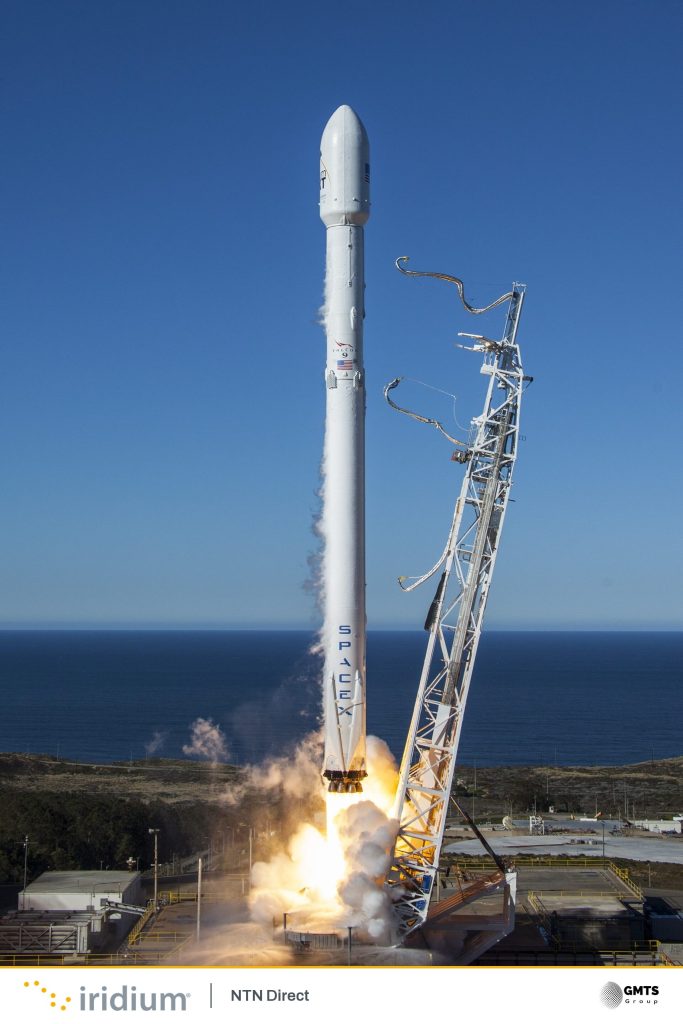
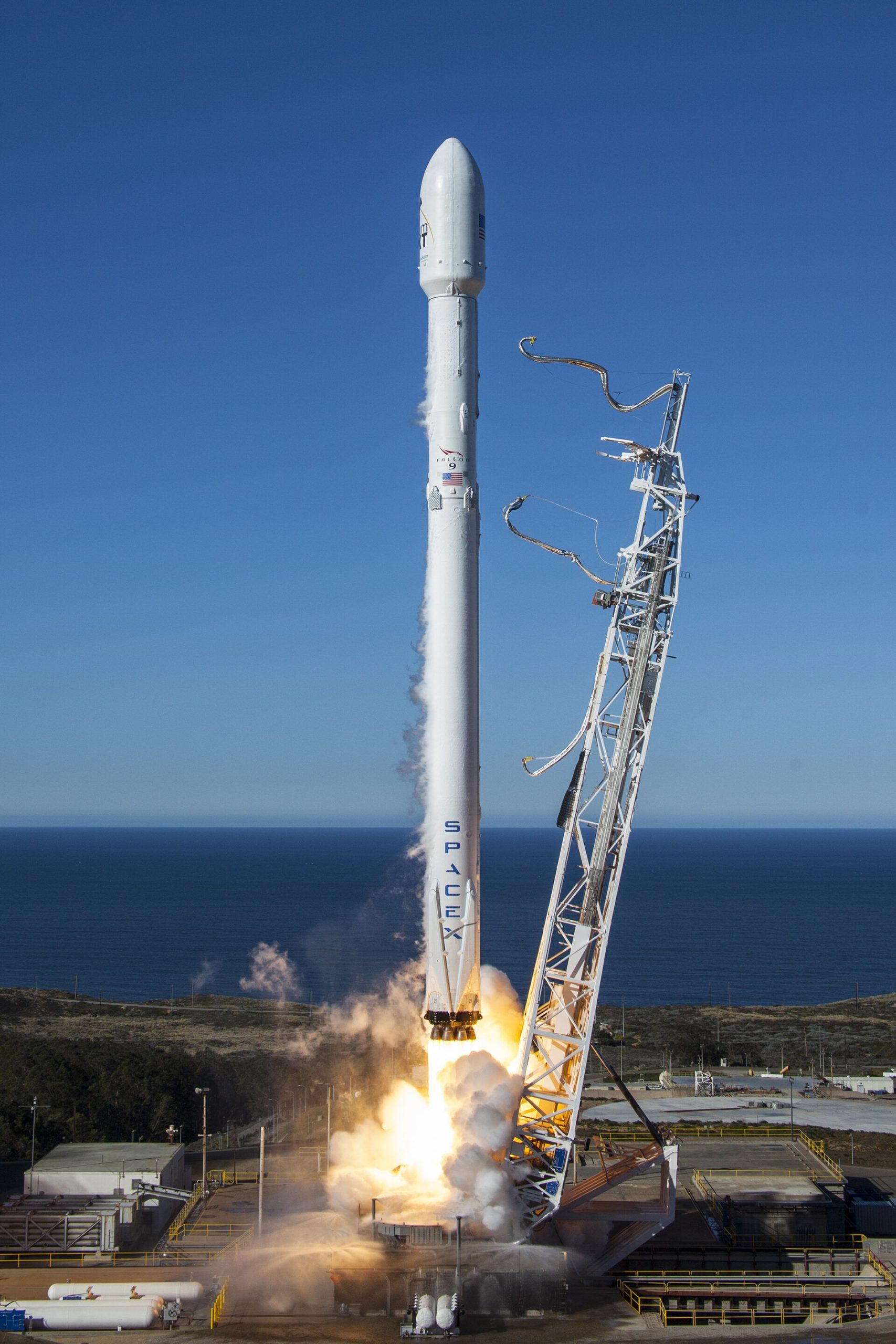
Photo: SpaceX, “Iridium-1 Launch”, CC0, via Wikimedia Commons.
Anyone who’s farmed a back block, run a forestry crew or managed a remote pump station knows the moment: the last bar of coverage disappears and so does your view of what’s happening out there.
On 17 November 2026, Iridium announced it had activated Iridium NTN Direct, a satellite service built for exactly those places. It isn’t a new phone service or a broadband rival. It’s something quieter, and for a lot of rural operations, potentially more useful.
What NB-IoT satellite is (and isn’t)
NB-IoT (narrowband Internet of Things) is a cellular standard for small, low-power devices that send little bits of data: a GPS position, a tank level, a temperature, an “I’m OK” button. Lots of trackers and sensors already use it over the mobile network.
What’s new is that NTN Direct is 3GPP standards-based. In plain terms, it speaks the same language as the cellular networks those devices already use. Via Satellite explains that this means compatible chipsets can, in some cases, join the service without new hardware. Iridium runs it over its existing low-Earth-orbit constellation and L-band spectrum, and claims “100% global coverage”.
What it isn’t:
- Not a phone replacement. Via Satellite notes it’s geared to devices like smartwatches, trackers and sensors rather than consumer phones.
- Not broadband. You won’t stream, video call or run the farm office over it. That’s a job for Starlink.
- Not a reason to drop your safety gear. A beacon is still a beacon.
Where it could help on the land
Iridium lists applications including asset tracking, fleet management, smart agriculture, utility metering, industrial monitoring and personal safety. In New Zealand terms, that looks like:
- Stock tracking. Iridium highlights livestock as a key use. Virtual-fencing company Nofence says it’s integrating NTN Direct into its N3 collars so “losing a signal shouldn’t mean losing sight of the herd”.
- Water and tank sensors. Troughs, tanks and bores on the far side of the hill reporting levels without a site visit.
- Asset tracking. Machinery, trailers and gear on forestry blocks and remote worksites.
- Lone-worker safety. Check-ins and alerts from staff working beyond coverage.
- Remote infrastructure. Pump stations, weather stations and gates.
When can you actually use it?
Two dates and one big caveat.
- The service is live now, according to Iridium.
- Existing modules may get a firmware upgrade in January 2027. Iridium has certified Nordic Semiconductor’s nRF9151 as the first approved module, and Nordic plans a public firmware update in January 2027 so devices already using that module can connect without new hardware.
- The caveat: Iridium says that while coverage can be provided anywhere on the globe, initial availability will vary and authorisation in each country depends on local laws, regulations and service provider conditions. We haven’t seen a New Zealand availability date. We’ll tell you when there is one.
So this is a “plan now, deploy when it’s authorised here” story. If you’re choosing trackers or sensors in the next six months, it’s worth asking whether the hardware could support NTN Direct later.
Where Starlink, Iridium and cellular each fit
The right link for the job
– Cellular (4G/5G): The cheapest, simplest option wherever there’s coverage. Use a proper router and external antenna to stretch it.
– Starlink: Broadband anywhere with a view of the sky. The farm office, the woolshed, the lodge, the remote camp.
– Iridium handsets and terminals: Voice and messaging that work almost anywhere. The safety layer for crews and boats.
– Iridium NTN Direct (once available in NZ): Small devices sending small amounts of data from places nothing else reaches, on low power.
Most remote sites end up with a combination. Starlink for the office, cellular where it reaches, Iridium for safety, and low-power sensors reporting in from the back paddocks.
How to get started: a site audit
Before buying a single sensor, we’d walk the property with you, on the ground or on a map:
- What do you need to know, and how often? Water levels daily? Stock location hourly? A lone-worker alarm instantly?
- Where is the coverage today? Map cellular, check the sky view for Starlink, and find the true dead zones.
- Power. Solar, batteries, mains? Low-power devices change what’s possible.
- What’s already installed? Some existing trackers and sensors may support new services later.
- Who gets the alerts? A sensor that reports to nobody is just an expensive ornament.
From there, we design the mix. We work with Iridium, Globalstar and Pivotel for satellite, Starlink for broadband, and cellular through GMTS Connect.
Talk to the team
Got a back block that’s gone dark? Talk to us or book a site audit. Read about our rural connectivity, Starlink on land and our satellite partners.
We’re a certified supplier and installer, and we can support you or your preferred installer on site. Starlink airtime is also available with flexible plans and pool options.
Sources
- Iridium Activates Iridium NTN Direct; World's First Standards-based NB-IoT and D2D Service with Truly Global Coverage, Iridium Communications. https://investor.iridium.com/2026-11-17-Iridium-Activates-Iridium-NTN-Direct-Worlds-First-Standards-based-NB-IoT-and-D2D-Service-with-Truly-Global-Coverage (accessed 20 Nov 2026)
- Iridium Launches Service for Iridium NTN Direct; Its Standards-Based D2D Offering, Via Satellite. https://www.satellitetoday.com/connectivity/2026/11/17/iridium-launches-service-for-iridium-ntn-direct-its-standards-based-d2d-offering/ (accessed 20 Nov 2026)