


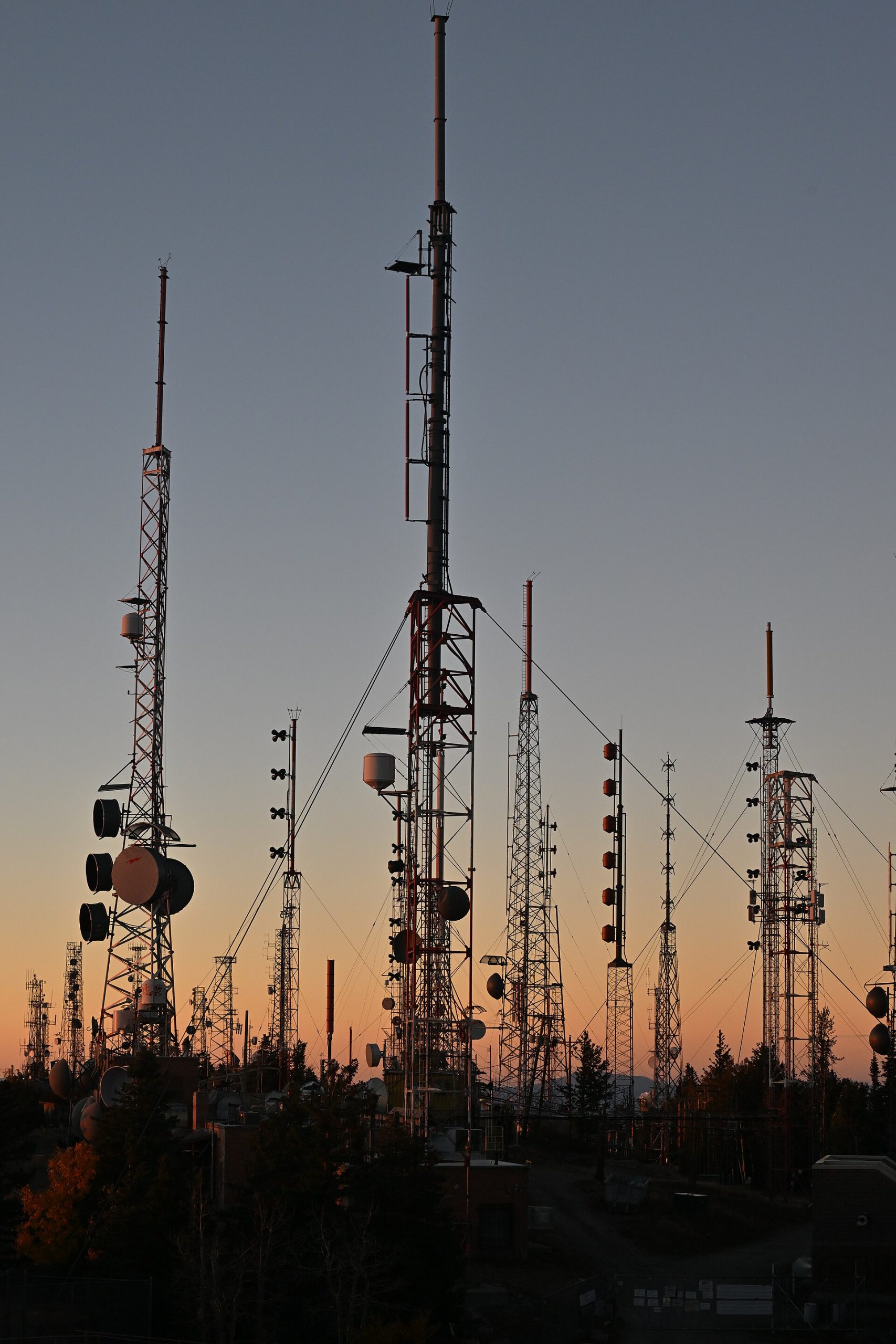
Two bits of telco news landed in the same week. One NZ made its first 5G standalone test call. And Elon Musk told a New York conference that SpaceX has designed a rooftop “micro cell tower” for Starlink Mobile, going into production next year.
Both sound big. Both come wrapped in jargon. So here’s our plain-English take: what each one means, what you can actually buy today, and what’s still a roadmap.
5G non-standalone vs standalone, in plain words
Most 5G in New Zealand today is non-standalone (NSA). The 5G radio on the tower is new, but behind it the network still leans on the older 4G core. It’s faster than 4G, but it’s 5G with 4G plumbing.
Standalone (SA) swaps in a dedicated 5G core. As Bill Bennett puts it, seven years after commercial 5G launched here, local networks have mostly run in non-standalone mode. Moving to a pure 5G core is what lets carriers deliver on the early promises: lower latency, more capacity and better security.
One NZ’s test call ran on a new 5G core built with Ericsson. What it hasn’t done is set a commercial launch date. The company says it needs more integration and testing first. One NZ isn’t the first here either; Bennett notes Spark already runs a commercial standalone core for its event service.
Network slicing: what it could mean for business
Standalone 5G makes network slicing possible. Think of it as splitting one physical network into several virtual ones, each tuned for a job: one slice for a port’s cranes, another for a farm’s sensors, another for a film crew’s live feed.
Bennett reports slicing is already being deployed locally for Wellington’s CentrePort, and One NZ talks about tailoring it for manufacturing, logistics and precision agriculture. Its CTO, Sharina Nisha, says standalone lets One NZ “think beyond traditional mobile connectivity”.
For most businesses, that’s a “watch this space”. There’s no slicing product to order yet, and no date for one.
Phone-to-satellite: what exists, what’s planned
This one’s easier to answer, because part of it is already here.
What exists in NZ today. One NZ Satellite uses Starlink’s direct-to-cell satellites. One NZ says it reaches the roughly 40% of New Zealand’s landmass without traditional mobile coverage and up to 85 nautical miles offshore, with an eligible phone and plan and a clear view of the sky. It passed 20 million TXT messages in October 2026 and now supports select apps as well as TXT.
What’s planned. TechCrunch reports Musk said SpaceX has finished designing a small rooftop cell site, “a micro cell tower thing that you just put on your roof, like a Starlink dish”, aimed at buildings where a metal roof blocks the signal from space. He said it’s going into production “I think, next year”. PCMag adds that SpaceX is aiming to switch on second-generation Starlink Mobile in early 2028, and that some analysts are sceptical of the micro cell approach.
The NZ status. All of that is about SpaceX’s plans as a US carrier. There’s no announced New Zealand product for the rooftop micro cells, and Musk is famous for optimistic dates. File it under “interesting, not yet actionable”.
What to do today
Plenty of good options are available right now:
- Use the 4G/5G you’ve got, properly. A business-grade cellular router with external antennas will usually outperform a phone on the dashboard or a hotspot on the windowsill.
- Pick the right SIMs. For vehicles, vessels and sites, we provision One NZ SIMs through GMTS Connect, alongside multi-carrier options where coverage calls for it.
- Fix indoor coverage where the signal exists outside. When there’s good coverage in the yard but none inside a steel shed or office, a carrier-approved Cel-Fi smart repeater is the right fix, not a cheap booster.
- Add Starlink where cellular runs out. For remote sites, Starlink plus a cellular backup behind one Peplink router gives you two independent paths.
- Keep satellite TXT in your back pocket. Phone-to-satellite messaging is a great safety layer for staff working out of coverage. It’s not a business internet connection.
What we’re watching
On our radar
– One NZ 5G standalone: any commercial launch date, and which business plans get access first
– Network slicing: the first products a business can actually order
– The proposed One NZ and 2degrees network joint venture (“RANCo”): the Commerce Commission is considering whether to clear the two companies jointly owning and operating their radio access network assets, the equipment on the towers. Its published timetable had a decision due by 23 November 2026, with the option to extend. Check the Commission’s case register for the outcome.
– Starlink Mobile hardware: any sign the rooftop micro cells come to New Zealand
We’ll keep translating as things move. If a new option genuinely helps your site, we’ll tell you. If it’s still a press release, we’ll say that too.
Talk to the team
Patchy coverage at a site, in a fleet or on a boat? Talk to us or book a time. See our cellular routers and SIMs, rural connectivity and business internet.
We’re a certified supplier and installer, and we can support you or your preferred installer on site. Starlink airtime is also available with flexible plans and pool options.
Sources
- One NZ tests 5G standalone, ComCom backs landline rules, Bill Bennett. https://billbennett.co.nz/one-nz-5g-standalone-comcom-interconnection-spark-cybersecurity/ (accessed 20 Nov 2026)
- Elon Musk says SpaceX has a plan to eliminate cell phone dead zones, TechCrunch. https://techcrunch.com/2026/11/19/elon-musk-says-spacex-has-a-plan-to-eliminate-cell-phone-dead-zones/ (accessed 20 Nov 2026)
- Elon Musk Eyes Producing 'Micro Cell Towers' for Starlink Mobile Next Year, PCMag UK. https://uk.pcmag.com/networking/168459/elon-musk-eyes-producing-micro-cell-towers-for-starlink-mobile-next-year (accessed 20 Nov 2026)
- One NZ Satellite hits 20 million TXTs, One NZ. https://media.one.nz/stories/onenz-satellite-hits-20m-txts (accessed 20 Nov 2026)
- Clearance sought for 2degrees & One NZ to form joint venture to operate radio access network assets, Commerce Commission. https://www.comcom.govt.nz/news-and-media/news-and-events/2026/clearance-sought-for-2degrees-and-one-nz-to-form-a-joint-venture-to-operate-their-radio-access-network-assets/ (accessed 20 Nov 2026)